VantAI Renames, Raises $80M to Scale AI Platform for Proximity-Based Drug Discovery
Proxima, formerly known as VantAI (Roivant spinout founded in 2019), has secured $80 million in seed funding to expand its AI-driven drug discovery platform for proximity-based therapeutics. The round was led by DCVC with participation from NVentures (NVIDIA’s venture arm), Braidwell, Roivant, AIX Ventures, and others. The company is developing tools to systematically design small molecules that modulate protein-protein interactions, aiming to address disease targets previously considered undruggable.
Less than 5% of human protein-protein interactions have been structurally characterized, leaving the majority of the human interactome unexplored. The rebrand to Proxima reflects its singular focus on proximity-based drug modalities and a platform designed to systematically map this space for the rational design of such therapies.
Proxima’s platform combines high-throughput structural biology with generative AI to design small molecules that control how proteins interact—an approach central to proximity-based therapeutics like molecular glues and PROTACs. At the core is NeoLink, a system that uses cross-linking mass spectrometry to measure distances between atoms on protein surfaces across the whole cell. This data provides structural “snapshots” of protein interactions at scale, but is too sparse for humans to interpret directly.
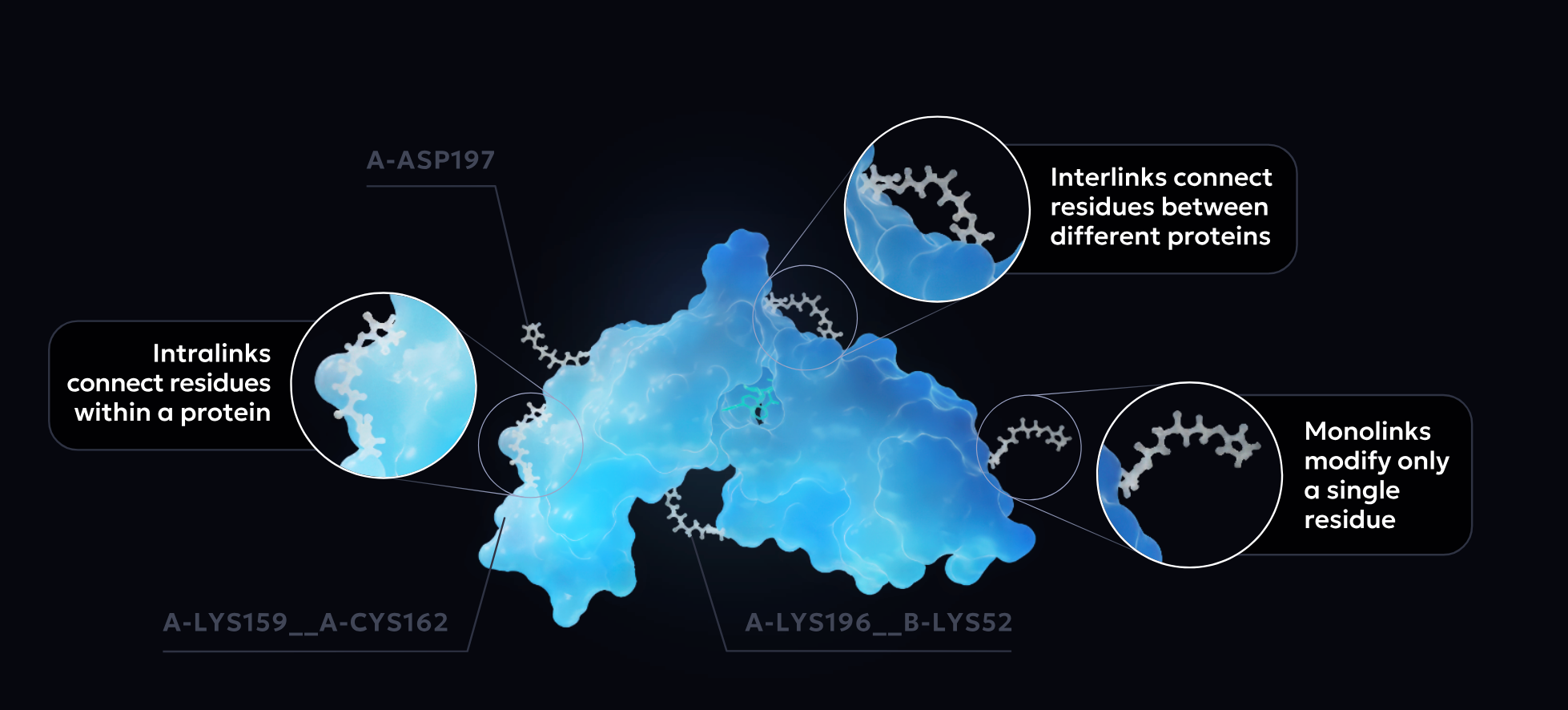
Fig. 12: Illustration of a ternary complex induced by a molecular glue captured by crosslinks.
Image credit: Proxima
To resolve this, Proxima developed Neo-1, an AI model trained to reconstruct full 3D protein structures from these limited inputs. This allows the platform to predict how drug molecules can induce or disrupt specific protein complexes, even in cases where structural data is missing or interactions are transient and difficult to model. As Neo-1 processes more data, it improves its predictive accuracy, creating a feedback loop that enhances future discovery efforts. Proxima’s platforms operate across oncology, immunology, and related indications.
See also: Roivant Spinout Debuts AI Model to Combine Biomolecule Structure Prediction and Generation
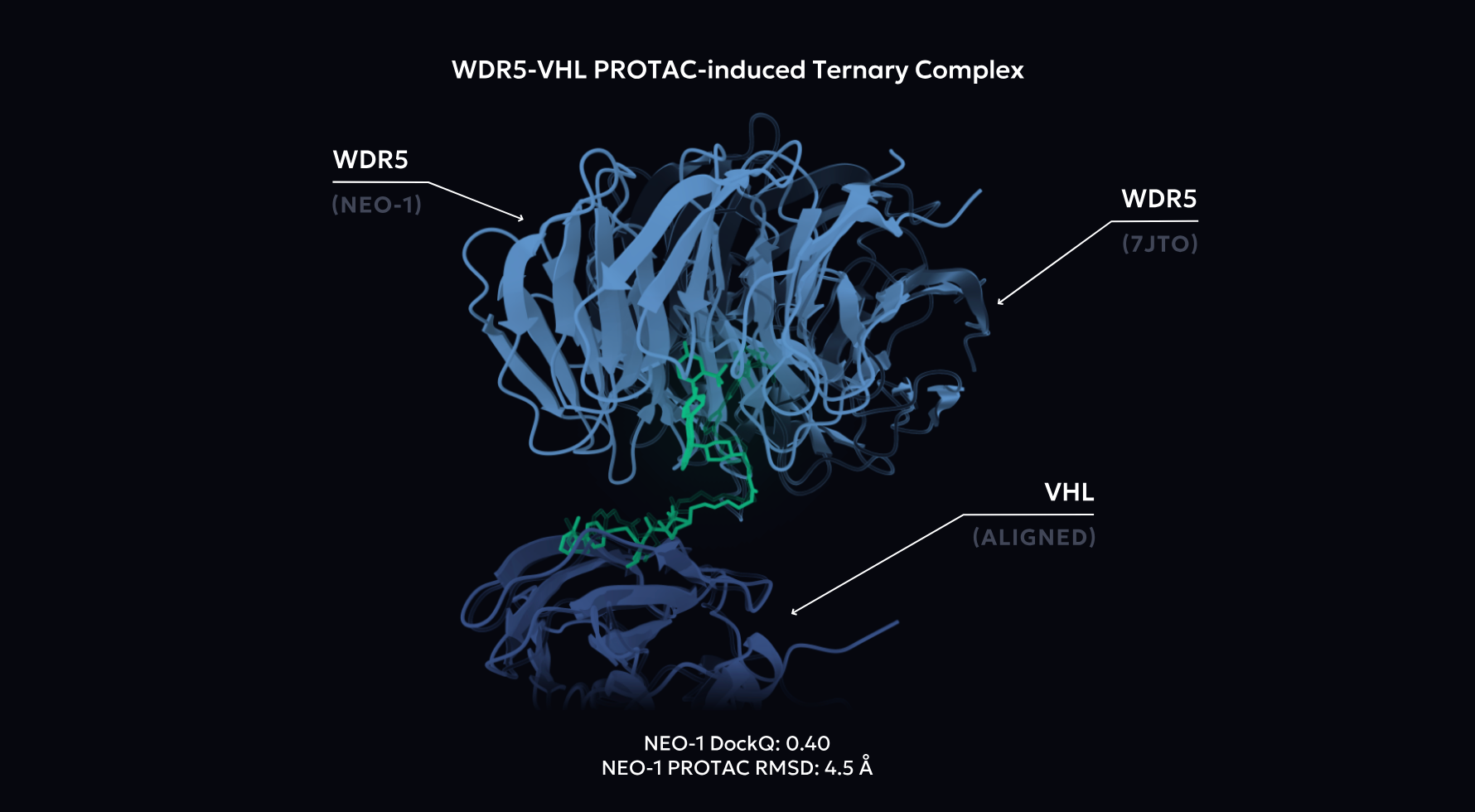
Fig. 15: Neo-1 co-folding predictions of the WDR5-VHL PROTAC ternary complex (7JTO), released after the model’s training cutoff.
Image credit: Proxima
The company reports existing multi-billion dollar research collaborations with Johnson & Johnson, Bristol Myers Squibb, and Blueprint Medicines. Several partnered programs are in development, with the first expected to enter clinical trials in 2026.
Cover image credit: Proxima; Proxima co-founders (left to right): Zachary Carpenter (CEO) and Luca Naef (CTO).
Topic: Biotech Ventures


