Merck Signs $20M Deal With Quotient to Find IBD Targets Using Somatic Genomics
Merck has entered a discovery collaboration with Quotient Therapeutics, committing $20 million upfront to access Somatic Genomics, an AI-enabled platform that analyzes somatic mutations directly in patient tissues. The agreement focuses on identifying new drug targets for inflammatory bowel disease (IBD), with potential milestone payments bringing the total deal value to $2.2 billion.
Under the collaboration, Quotient will apply its somatic genomics platform to profile mutations present within diseased tissues, aiming to identify variants that either drive pathology or confer protection. Unlike inherited genetic variants, somatic mutations arise continuously due to environmental exposure, cellular processes, and aging, resulting in a mosaic of distinct genomes across different cells and tissues.
The aim is to map disease-relevant genetic variation that accumulates across cells over a patient’s lifetime, a layer of biology not typically captured in standard germline genomics.
Quotient Therapeutics, founded by Flagship Pioneering in 2022, is developing a drug discovery platform based on Somatic Genomics, which focuses on genetic changes that occur in individual cells over a person’s lifetime rather than inherited DNA.
Quotient’s platform has attracted multiple pharma partnerships. GSK previously entered a multi-program collaboration with Flagship Pioneering, including Quotient, to explore targets in liver and pulmonary diseases, with program-level milestones reportedly reaching up to $720 million. Across these agreements, the company is positioning somatic mutation analysis as a complementary layer to existing genomics and multi-omics approaches in drug discovery.
Somatic Genomics analyzes genetic mutations directly within patient tissues to identify which changes are linked to disease. It treats each mutation as a small natural experiment, showing whether it makes cells more vulnerable, protective, or unaffected. Because somatic mutations accumulate extensively within organs, the system can identify disease-relevant genes from relatively small patient cohorts, often on the order of tens rather than thousands.
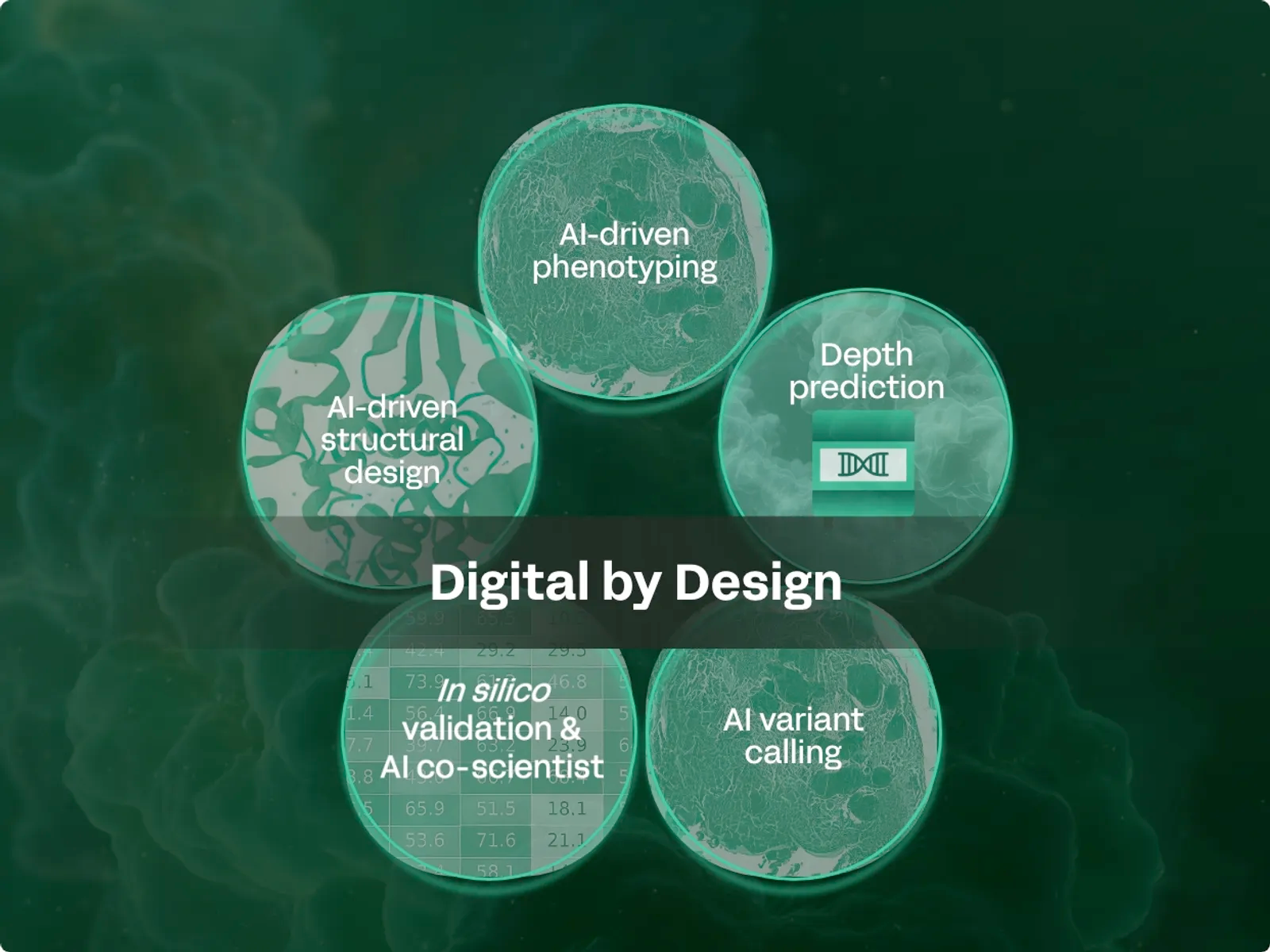
Image credit: Quotient Therapeutics
The platform combines high-resolution sequencing with AI and computational analysis to map where, how, and which targets to act on, supporting both target discovery and early drug design decisions.
While traditional genomics focuses on a single reference genome per individual, the somatic genome consists of potentially trillions of cell-specific genetic variations. This makes it a large, underexplored search space.
In IBD, where disease heterogeneity remains a challenge and no disease-modifying therapies are widely established, this type of patient-derived genomic mapping is being explored as a way to refine target selection and potentially improve response rates across broader patient populations.
Merck has already made a substantial investment in the immunology and inflammatory disease space. In 2023, Merck acquired Prometheus Biosciences for nearly $11 billion, which had the anti-TL1A antibody tulisokibart as its main asset. The drug is currently in late-stage trials for ulcerative colitis and Crohn’s disease, with additional studies underway in related inflammatory conditions.
Tumor necrosis factor (TNF)-like cytokine 1A (TL1A) is a popular route in inflammatory bowel diseases because it drives both gut inflammation and tissue scarring.
Earendil Labs, for example, recently raised $787 million to expand its AI-based biologics platform and move antibody programs toward the clinic with HXN-1001, an anti-TL1A antibody for inflammatory bowel disease, that it says is ready for phase 2 development. Sanofi and Teva’s duvakitug is among the more advanced TL1A-directed programs in ulcerative colitis and Crohn’s disease, already showing positive phase 2b data.
Cover image credit: Quotient Therapeutics
Topic: Industry Movers