The Biobank Bet: Why AI’s Next Frontier Is Stored Human Biology — A Conversation with Maccabi’s Michal Zucman-Katz
A specific idea is increasingly taking hold in 2026: that the raw material for the next generation of medicines is not more compute or cleverer algorithms, but stored human biology — patient tissue and blood, linked to what actually happened to the patient over time. It is still an early bet, measured in tens of millions rather than the billions pouring into AI models, and placed so far by only a handful of players. But its shape is now visible. In January, GSK paid $50 million upfront to license virtual-cell models from the startup Noetik, built on its own proprietary tissue data. In August, Network Bio launched with $50 million to stitch together the biobanks of US academic medical centers, and by November had signed Duke as its first named partner.
To understand what makes one of these sample libraries valuable — and why owning the most is not the same as owning the best — I spoke with Michal Zucman-Katz at HLTH Europe 2026 in Amsterdam.
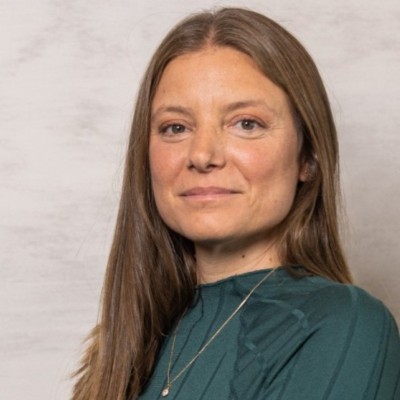
Zucman-Katz is Chief Innovation and Research Officer at Maccabi, Israel’s second-largest health-maintenance organization (HMO), and an engineer-turned-pediatrician who once founded a medical knowledge-graph company.
She rejects the framing most people start from. The contest is usually described as a matter of size: who has the most samples, the most genomes, the largest cohort. Most biobanks have a single biological-sample view,
she told me. Most of them don’t have such rich EHR data.
The distinction she is drawing to illustrate the limitations of many biobanks is between a photograph and a film.
Most biobanks, even the largest, are essentially cross-sectional: one baseline measurement per participant. That is the wrong instrument for the questions that matter most, like how a disease develops, how a patient responds to a drug, and why one responds and another doesn’t.
Maccabi built the other thing. Its biobank, named Tipa, and run by its research arm, Kahn-Sagol-Maccabi (KSM), holds more than a million serial samples across 2.8 million members, accrued passively: when a consented member gives routine blood, the system banks an extra aliquot.
Over years, that produces a biological time-series. Before diagnosis, after diagnosis; before a treatment, after a treatment; before a complication, after a complication,
she said. Sometimes there are tens, even hundreds of samples
per patient.
That is precisely the gap the new entrants are trying to close and it explains why they describe their core problem as linkage, not collection.
For instance, Network Bio raised its $50 million to connect academic biobanks into one dataset of tissue, paired blood and longitudinal outcomes from 500,000+ patients.
Every patient leaves a barcode of their disease in their tissue, and until now no one has been able to read those barcodes at scale,
said CEO Asad Ali Ahmad. The obstacle he names is American biobanking’s structural flaw: the samples exist, but they sit in institutional silos, collected under different standards and impossible to train across. His whole pitch is building the connective tissue to make them readable together.
Israel never had that problem, which is the heart of Maccabi’s advantage. Where Network Bio has to engineer linkage across institutions, Maccabi gets it by design. Israel digitized its records some 30 years ago, so the EHR substrate is deep. And Maccabi is both payer and provider, so the clinical record never breaks.
We know everything, from birth to bedside,
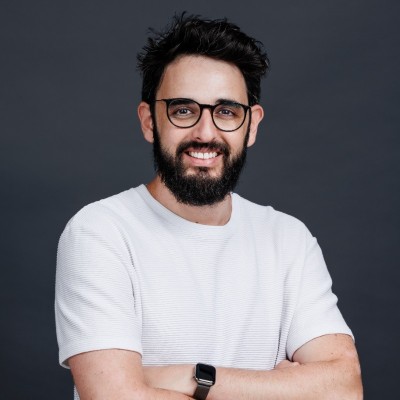
Gil Azulay, Director of Business Development & Partnerships at Maccabi Innovation, a molecular biologist by training, put it; even if he goes to the hospital, I’m the payer, so I know everything that happened.
Because it also runs a closed local environment, Maccabi can deliver fresh tissue fast enough for assays frozen archives can’t serve — transcriptomics among them, where molecular state decays within minutes of the draw.
The asset compounds. The population of 2.8 million grows slowly, but the data on each member deepens with every partnership — genetic, proteomic, multi-omic layers added as companies come through. The more we work with this data, the bigger it becomes,
Zucman-Katz said, and the more value it brings to the companies that work with it next.
For Gil, that depth is the whole pitch, and he makes it in the language of a frontier. No one in the world knows about this gold mine,
he said. The signal, he argues, is already lying in the data — existing drugs with known safety profiles that could be repositioned the moment a biobank surfaces a correlation no one had looked for. The dream, in his words, is access to the molecular biology of patients, serially, over time, at the population level.
For all the enthusiasm around her own asset, Zucman-Katz is unusually reserved about the technology meant to exploit it… Artificial Intelligence (AI), she argues, is mostly being pointed at the wrong target.
AI is being applied to optimize the old processes,
she said, whereas what it should be doing is redesigning them in the first place.
It has compressed the time to a candidate molecule while leaving the step that actually kills drugs untouched. It’s not solving the bottleneck — the clinical translation. The molecules fail in trials, and AI isn’t moving much there.
Her example of what redesign would look like is reverse translation: rather than wait for a molecule to fail in the clinic, gather the clinical signal early and feed it back into preclinical design — the kind of loop a serial, clinically-linked biobank is built to enable.
That feedback loop is also where she thinks Maccabi’s size becomes an advantage. Discovery, validation, clinical work and the signal that comes back from it can sit inside one system, rather than scattered across segmented departments, or even health systems, or even countries.
Where AI earns its keep today, in her account, is more modest and operational: feasibility studies. Scoping whether the bank holds what a partner needs once took teams of data scientists working manually, but it now runs fast enough to match a company’s pace, which matters because the inputs have exploded.
The patient data comes from wearables, from clinical data, unstructured data, notes, images, pathology results — there’s a lot,
she said. And of course, AI can do it much better.
She draws the line carefully: This is not a clinical quality improvement, but it lets us work at the
The grander ambition she treats as real but distant: a biological world model
that learns the grammar of disease the way large language models learned language. She cited Noetik — a company that, she noted, runs deep measurements on a small bank of about 1,000 melanoma samples and feeds them into a model meant to understand the underlying biology. In a way it’s an OpenAI-like approach, building a ChatGPT that understands biology,
she said.
On what a resource like Maccabi’s returns against that today, she doesn’t inflate it: It probably won’t bring a concrete ROI today, but it will build the future — maybe two or three years, maybe five.
The signal that could move medicine already exists, dormant, in archives nobody could yet read at scale. The differentiators, she’s betting, are temporal resolution, clinical linkage, fresh-sample capability, and governance a partner can trust — not raw size. But she’s clear the rest doesn’t follow automatically.
There’s an ecosystem that has to work together,
she said, to change the way biology becomes part of how we improve medicine — not just drug discovery.
Topic: Next-Gen Tools