BioPharmaTrend
Latest Insights
Companies
  • Companies Directory
  • Case Studies
Newsletter
About
  • At a Glance
  • Our Team
  • Advisory Board
  • Citations and Press Coverage
  • Partner Events Calendar
  • Advertise with Us
 
 Subscribe 
Sign in
  • AI in Bio
  • Tech Giants
  • Next-Gen Tools
  • Biotech Ventures
  • Business Intelligence

  Business Intellilgence

The Bigger Point Beyond Insilico's Aging Research Milestone

by Andrii Buvailo, PhD   •   Sept. 9, 2026

Disclaimer: All opinions expressed by Contributors are their own and do not represent those of their employers, or BiopharmaTrend.com.
Contributors are fully responsible for assuring they own any required copyright for any content they submit to BiopharmaTrend.com. This website and its owners shall not be liable for neither information and content submitted for publication by Contributors, nor its accuracy.

# AI in Bio   
Share:   Share in LinkedIn  Share in Bluesky  Share in Reddit  Share in Hacker News  Share in X  Share in Facebook

This week Insilico Medicine, an AI-driven drug discovery company, reported an unusual experiment. Arguably for the first time, aging biomarkers were written prospectively into a controlled trial run for a conventional disease indication. 

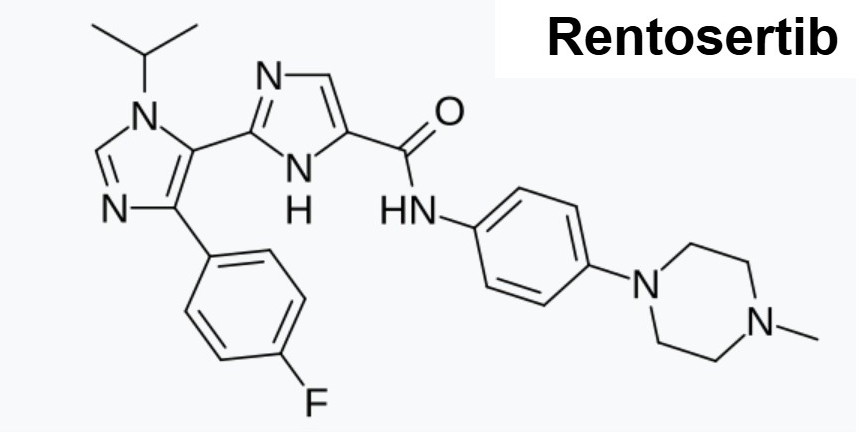
Six proteomic aging clocks were applied to serum banked during the completed phase 2a of rentosertib in idiopathic pulmonary fibrosis, and all six returned lower predicted biological age in the treated arms than in placebo, by three to four years at the week-four peak and as much as six years on one model. The analysis appeared in Nature Biotechnology, with co-authors from Harvard, Stanford, the Broad Institute, Peking University and Westlake University.
The news received widespread media attention, including mainstream outlets such as The NYT, WSJ, and Bloomberg, but almost all titles focus on the potential ability of rentosertib to slow aging, while I think the story has a bigger point that could be more impactful for the area of aging research and the longevity industry. 

The drug itself may well turn out to be a geroprotector, and the paper is honest that its own data leaves that question open (for now). What the study does settle is that aging can be measured as an exploratory endpoint inside a normal, regulated, placebo-controlled trial run for a conventional disease indication. That is a template for others to follow, and templates travel further than single results.

But before we jump into that, let's review the actual results beyond the hype, and some caveats.

What was actually measured 

Rentosertib is a TNIK inhibitor developed for idiopathic pulmonary fibrosis. Its phase 2a clinical trial ran across sites in China through 2023 and 2024, and it was reported in Nature Medicine in June 2025 that it met its primary safety endpoint with a dose-dependent efficacy trend, including a mean forced vital capacity improvement of 98.4 mL in the 60 mg once-daily arm against a 20.3 mL decline on placebo. The drug has since advanced to phase III clinical trial.

The phase 2a trial protocol had prospectively included longitudinal serum proteomic collection as an exploratory biomarker layer. 

To read the rest of this article, upgrade to a BiopharmaTrend Pro subscription.

Gain full access to all of our deep dives and content archives.

 Upgrade to Pro 

Already a member? Sign in here.

Topic: AI in Bio

Insilico Medicine
Share:   Share in LinkedIn  Share in Bluesky  Share in Reddit  Share in Hacker News  Share in X  Share in Facebook

BiopharmaTrend.com

Where Tech Meets Bio
mail  Newsletter
in  LinkedIn
x  X
rss  RSS Feed

About


  • What we do
  • Press & Citations
  • Terms of Use
  • Privacy Policy
  • Cookies Policy
  • Disclaimer

Topics


  • News
  • AI in Bio
  • Tech Giants
  • Next-Gen Tools
  • Biotech Ventures

Explore


  • Premium Insights
  • Business Intelligence
  • Companies
  • Events
  • Authors

Partner


  • Sponsorship
  • Editorial Calendar

© WTMB Research & Media, S.L. (WTMB Group)   2026
We use cookies to personalise content and to analyse our traffic. You consent to our cookies if you continue to use our website. Read more details in our cookies policy.