Converge Bio Raises $25M for Generative AI Systems in Antibody and Protein Design
Converge Bio, a Boston- and Tel Aviv-based startup developing generative AI systems for drug discovery, has raised a $25 million oversubscribed Series A round led by Bessemer Venture Partners, with participation from TLV Partners, Saras Capital, Vintage Investment Partners, and executives from Meta, OpenAI, and Wiz. The round comes about a year and a half after Converge raised a $5.5 million seed round in 2024.
The company builds customer-facing AI systems trained directly on biological sequences, including DNA, RNA, and proteins, and integrates them into existing pharma and biotech workflows. Rather than offering standalone models, Converge combines generative, predictive, and physics-based components into end-to-end systems designed for specific discovery and optimization tasks. Current offerings span antibody design, protein yield optimization, and biomarker and target discovery.
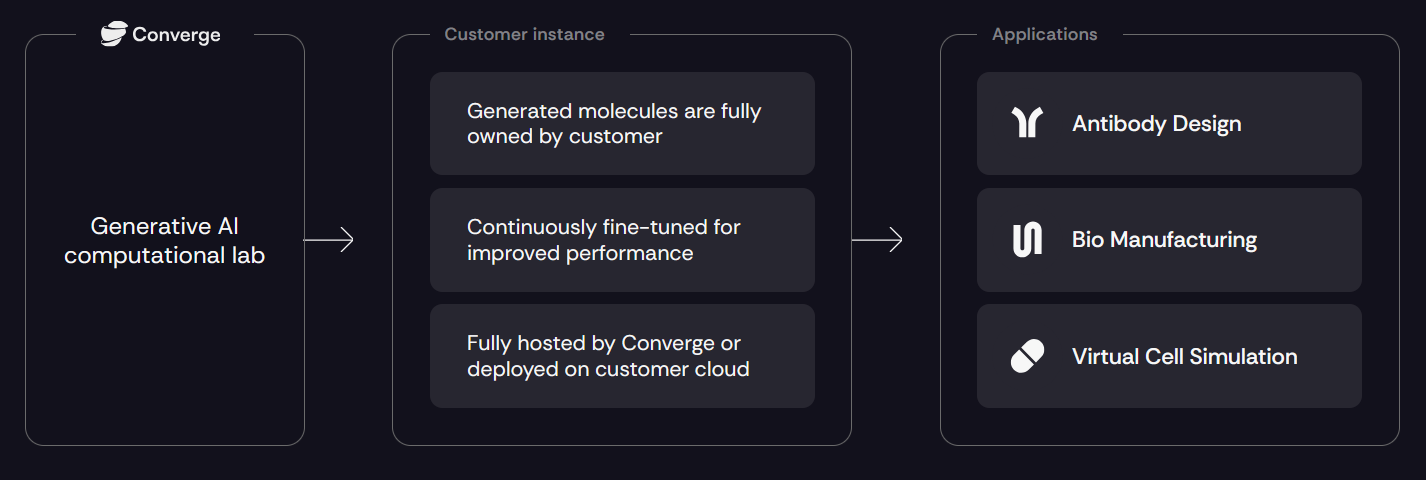
Converge Bio's stack
Converge’s CEO Dov Gertz frames the round against a wider surge of interest in AI-driven drug discovery, and argues the category is moving from trial-and-error toward data-driven molecular design. He also claims early skepticism has eased over roughly the past 18 months as more case studies have appeared from both startups and academia, and he links that shift to increased inbound demand.
On model risk, Gertz contrasts text hallucinations with molecule generation, arguing validation can take weeks and raises the cost of errors, so Converge couples generative models with predictive filtering to reduce the number of low-quality candidates entering downstream evaluation.
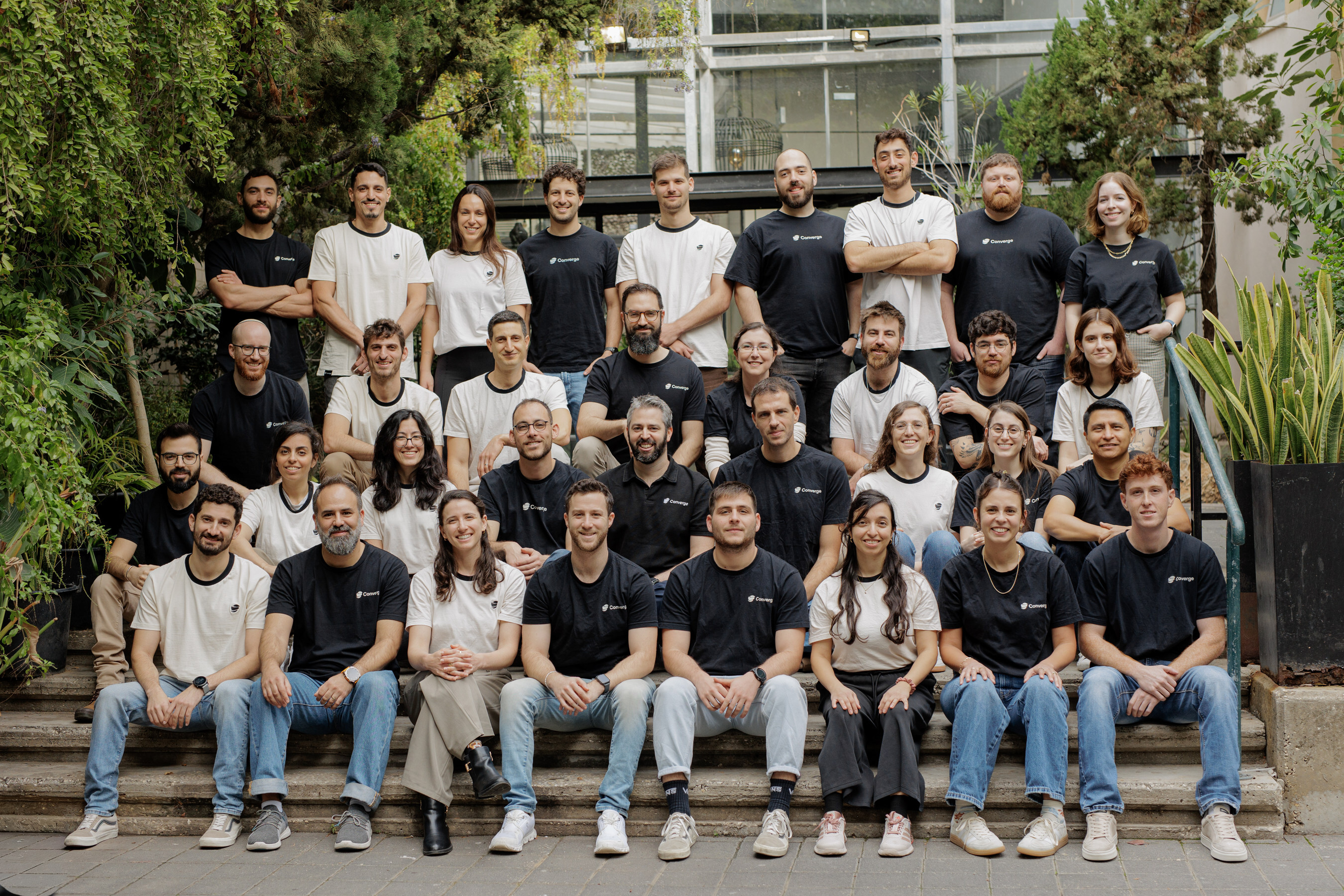
Converge Bio team
According to the company, Converge has completed more than 40 programs with over a dozen pharmaceutical and biotech customers across North America, Europe, Israel, and is now expanding into Asia. The team has grown from nine employees in late 2024 to 34 today. Public case studies cited by the company include reported 4-4.5x improvements in protein yield achieved in a single computational iteration, as well as antibody candidates reaching single-nanomolar binding affinity.
Converge positions its approach as distinct from text-centric large language models, emphasizing training on molecular and biological data rather than natural language. The platform combines multiple model classes, including sequence-based generative models, diffusion methods, traditional machine learning, and physics-based simulations, with language models used primarily for auxiliary tasks such as literature navigation.
We track developments like this weekly in Where Tech Meets Bio—our newsletter on startups, platforms, and deals at the intersection of biotech and digital.
Topic: Biotech Ventures