This Company Claims World-First AI Models For Programmable Gene Insertion
That’s the headline from Basecamp Research this week, and if it holds up, it’s an important signal for genetic medicine field.
Programmable insertion of large DNA sequences at precise locations in the human genome has been a decades-long goal. CRISPR revolutionized gene editing, but it typically relies on creating double-strand breaks and is better suited to smaller edits. Large, targeted insertions, especially in defined “safe harbour” sites, have remained technically constrained.
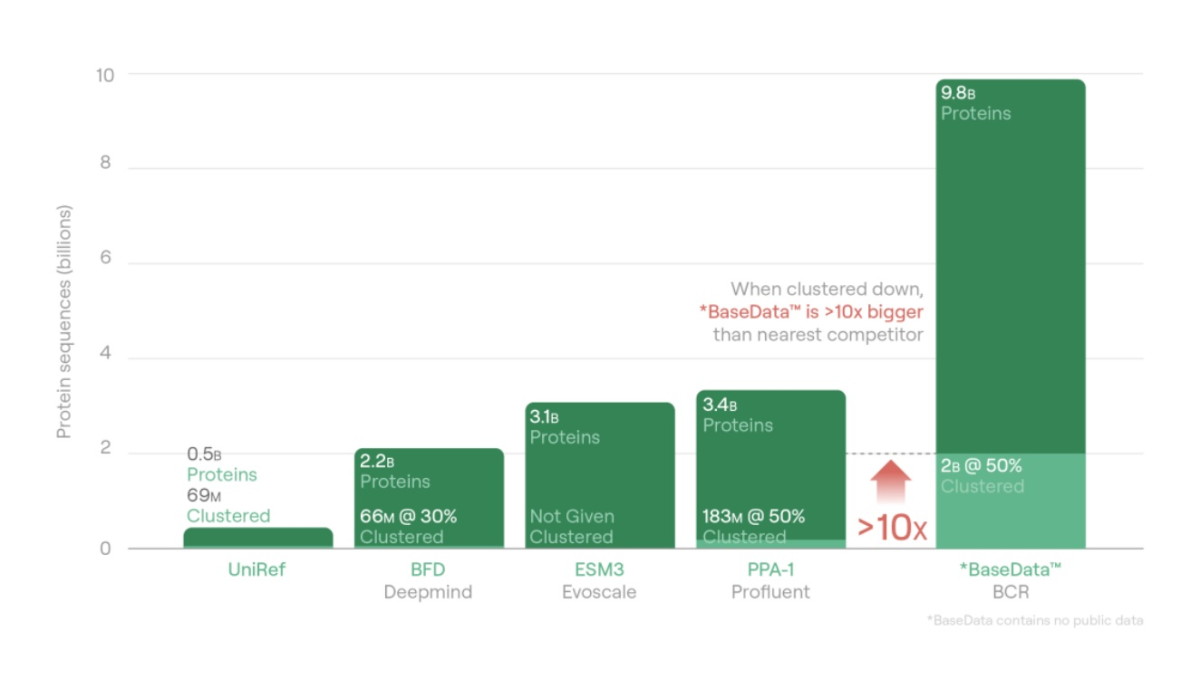
Image credit: Basecamp Research
Basecamp’s aiPGI™ platform, powered by its EDEN evolutionary foundation models developed with NVIDIA, is positioned as a step beyond that. Trained on more than 10 trillion tokens of evolutionary DNA from over a million newly discovered species, the models aim to learn deep evolutionary constraints well enough to design novel insertion enzymes from sequence context alone. In their reported lab results, the system generated active insertion proteins for 100% of tested disease-relevant genomic sites, using only the target DNA sequence as input.
Technically, that’s the interesting part. This isn’t just screening or optimizing existing editors - it’s conditioning a large biological model on a genomic locus and generating a bespoke insertion protein. The largest EDEN model was trained at GPT-4-class compute scale, putting it among the most computationally intensive biological models to date.
They also showed cross-domain capability: the same model designed antimicrobial peptides with a 97% lab-confirmed hit rate, including candidates active against multidrug-resistant pathogens. That kind of generalization is what you’d expect from a true biological foundation model, not a single-task tool.
If reproducible and scalable, programmable gene insertion without relying on conventional break-and-repair workflows could reshape how we approach cell and gene therapy design.
Topic: AI in Bio