Roche Launches its Own AI Factory for Drug Development
After purchasing 2,176 NVIDIA Blackwell GPUs, Roche announced the launch of a large-scale “AI factory” built on NVIDIA accelerated computing, aiming to integrate AI across drug discovery, development, and manufacturing.
Revealed at the NVIDIA GTC, this brings Roche’s total GPU capacity to more than 3,500 units across hybrid cloud and on-premise systems, which it states is the largest disclosed footprint among pharmaceutical companies. The infrastructure is designed to support model development, large-scale biological data analysis, and simulation-heavy workflows that are increasingly central to AI-based drug discovery.
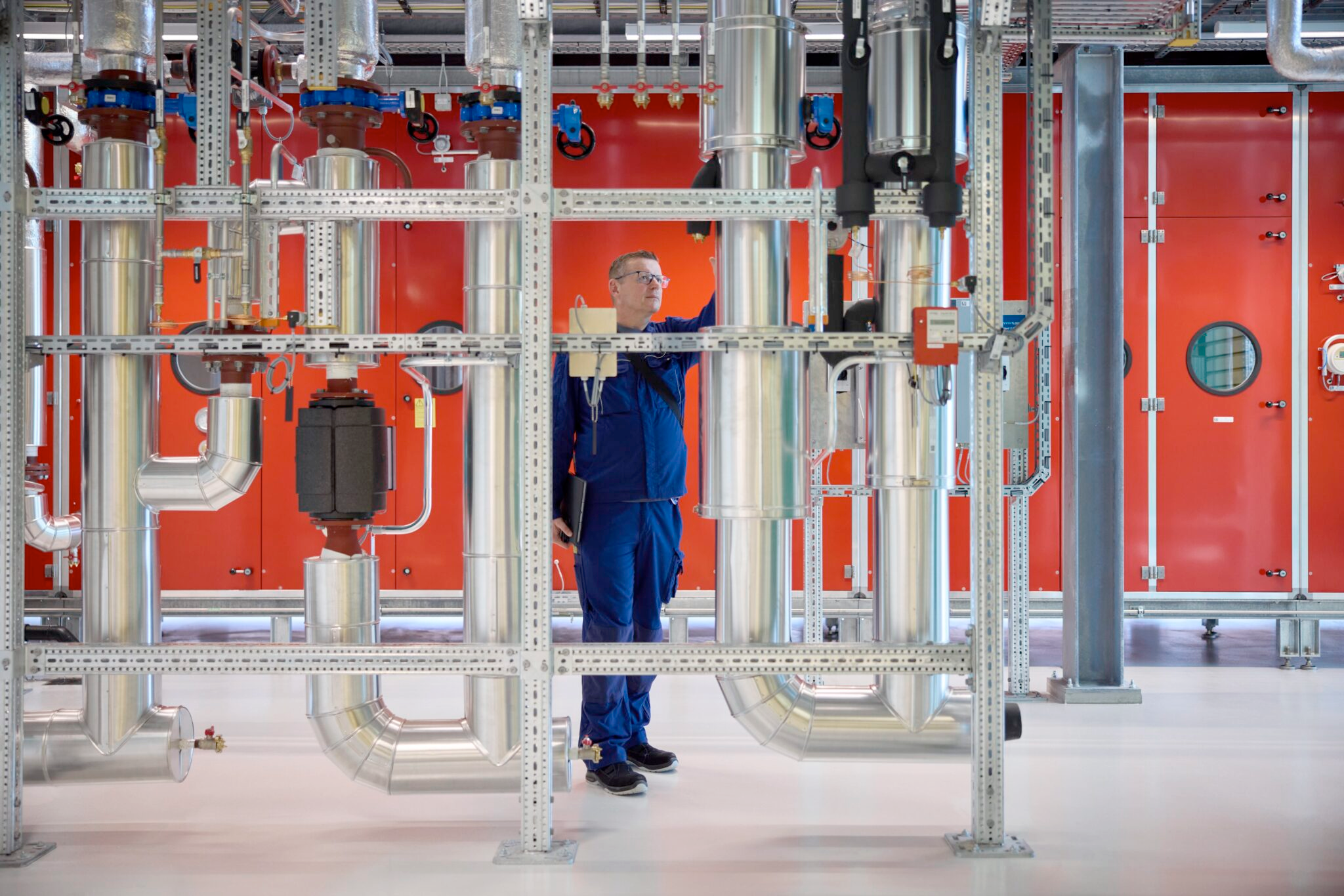
Image credit: NVIDIA
As model sizes increase and datasets grow more complex, pharmaceutical companies are investing in dedicated GPU clusters rather than relying solely on external cloud providers. At the start of this, Eli Lilly announced a partnership with Nvidia to build a $1 billion AI research hub year with a focus on accelerating manufacturing and drug development workflows. Under Lilly's greater effort to build its own AI factory, the company was the first to launch its own—LillyPod, an AI supercomputer also built on NVIDIA Blackwell GPUs (1016 units).
Roche’s AI factory is intended to scale machine learning workflows across multiple stages of the drug lifecycle, including target discovery, molecule design, clinical development, and manufacturing optimization. It connects with Roche’s “Lab-in-the-Loop” setup, where machine learning models are iteratively coupled with wet-lab experiments.
Roche is applying NVIDIA’s accelerated computing stack across several data-intensive areas:
- NVIDIA’s BioNeMo stack is used to train and run biological foundation models, allowing hypothesis generation and validation to operate in a continuous feedback loop between computation and experimentation,
- NeMo Guardrails are being used to manage safety in clinical AI applications,
- NVIDIA Parabricks is used to process large-scale sequencing data,
- AI models in digital pathology analyze high volumes of images to detect disease patterns.
Roche is also using NVIDIA Omniverse libraries to create digital twins of production facilities, allowing teams to model and test manufacturing systems before physical deployment. According to Wafaa Mamilli, Chief Digital Technology Officer (CDTO) at Genentech, these simulations are already being used in the development of a new GLP-1 production site in North Carolina to evaluate and refine process design.
AI models are increasingly being used to de-risk clinical trials by simulating patient responses, optimizing study design, and reducing reliance on traditional control groups, with digital twins emerging as one of the approaches under active exploration across the industry, and Roche is one of several players applying these methods.
In our recent analyses, we look at how digital twins are being tested as substitutes for control arms in trials, as well as how a broader set of companies are building these systems across clinical research, manufacturing, and patient-level simulation.
Roche is also combining internal AI development with external partnerships. In 2025, the company entered a collaboration with Manifold Bio, committing $55 million upfront, with potential milestone payments up to $2 billion. The partnership focuses on using AI to design delivery systems capable of transporting therapeutics across the blood-brain barrier.
The launch of the AI factory is another step in Roche’s U.S. subsidiary, Genentech’s and NVIDIA partnership to streamline drug development with AI.
According to Genenetch, all of their antibody programs and ~90% of eligible small molecule programs use AI in the discovery process. The company has also previously applied AI in oncology programs, including designing a molecule reportedly 25% faster than conventional methods and identifying structural configurations not achievable through standard approaches. In another case, AI models were used to predict and reduce immunogenicity risks in a cancer therapy now entering human trials.
Cover mage credit NVIDIA
Topic: Industry Movers