Interviews • Sponsored by Mosaic Biosciences
The Decisions That Make or Break an Antibody Discovery Program
Dr. Eric Furfine of Mosaic Biosciences on picking the right discovery route, catching liabilities before they get expensive, and getting the most from a CRO partner.
Most antibody programs that fail don’t fail at discovery. They fail later, when a molecule that looked great in an assay turns out to be unstable, hard to manufacture or unsuited to the product it was meant to become. Those problems usually trace back to choices made at the very start of a program.
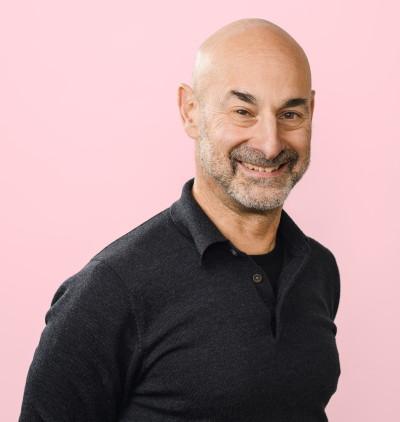 Eric Furfine, PhD, has seen those choices play out from both sides. He was SVP of Research and Preclinical Development at Adnexus, which Bristol-Myers Squibb acquired, and later Chief Scientific Officer at Eleven Biotherapeutics. Today he is Chief Scientific Officer at Mosaic Biosciences. Mosaic started in 2009 in Boulder, Colorado, as a University of Colorado biomaterials spinout, and has since become a biologics discovery partner. They now offer in vivo discovery through access to AbTherx’s Atlas Full Human Diversity mouse, WT Mice and alpaca alongside phage and yeast display. Since this autumn, their own fully human nanobody library, Tessaic Nano.
I sat down with Eric to talk through the decisions that make or break an antibody discovery program: how to match a discovery platform to the biology, why developability liabilities still surface too late, when an imperfect lead is worth optimizing, and what separates a real discovery partner from a vendor that just delivers data.
Andrii: You have worked on antibody discovery from both sides — building discovery platforms and working inside large pharma. How has that experience shaped the way you think about what makes a program succeed or run into trouble?
Eric: The most important thing you can do before starting an antibody program is to understand what the product profile is for your antibody. Large pharma is very good at thinking these things through before embarking on a discovery program, including the biophysical properties that will be required for manufacturing and shelf-life, not just biological activity. In my experience, big pharma does not do as much platform building for protein therapeutics as acquiring or utilizing external resources that are skilled in the art. Classic examples of this are my time at BMS when they acquired Adnexus, where I was head of Research and Preclinical, that has a platform for small protein discovery (adnectins) followed by the acquisition of Medarex, which was of course one of the first humanized mouse antibody discovery platform. In both cases, they waited for the platforms to prove they could create molecules that could be drugs, not just active proteins. At Adnexus we pushed an anti-VEGF molecule into a successful phase 1 program and Medarex had molecules late in clinical development, plus what became Yervoy and Opdivo. So the real value from a discovery platform is once it gets some level of clinical proof of concept, which means the platform has overcome not just biological activity but also many of the CMC attributes required of a medicine. Understanding the big picture and long-term goals is critical to designing a platform that produces molecules with those critical qualities and actually testing for those qualities. Nowadays, big pharma and small biotech increasingly rarely even acquire or build their own antibody discovery platforms as there are many external organizations that use tried and true technologies that are run by people who do this for a living and are highly skilled in the art. Why build your own when there is so much talent available externally for democratized use? That is the model we built Mosaic around: antibody discovery, engineering and developability assessment in one place, run by scientists who have taken molecules into the clinic.
Andrii: There are so many discovery technologies available today, from immunization and immune or naive libraries to different display platforms. How do you decide which approach is right for a particular target or program? For example, where does yeast display fit into the picture?
Eric: Every discovery platform has strengths and weaknesses. One needs a deep understanding of the biology and the desired product profile to select the best platform(s) for success. As examples, the first place in vivo discovery is best suited is for "hard targets" that are difficult to produce as purified monomeric species, such as GPCRs, ion channels, and solute receptors, all multi-spanning membrane proteins that are most stable and in active conformations when part of a cell membrane. The second strength of in vivo discovery is any target where the amino acid homology to the human protein is modest, minimal, or nonexistent, as in the case of non-mammalian targets like viruses or bacteria. In contrast, selection technologies like phage and yeast display are best when you can make high-quality (pure and active) soluble targets that can be used for panning and screening. These approaches are also especially helpful when there is high homology of the animal target (e.g. mouse target in a humanized mouse) to the human target because there are no factors limiting the selection process like there are limitations to an immune response to "self". Furthermore, you can drive your in vitro selections to specific epitopes on a molecule and employ positive and negative selections to find particularly selective molecules or particularly cross-reactive molecules (e.g. to animal targets or to other analogous receptors or homologs). Yeast display is useful in these regards in that not only do you apply specific positive and negative selective pressures to get your desired product candidates, but you can also select for other positive qualities by identifying high-expressing antibodies on the yeast surface, which is a quality that is often associated with other positive biophysical properties such as solubility, thermal stability, and expression levels in mammalian systems. Another place that yeast display shines is in optimization of existing antibodies. Increasing potency or other properties, such as selectivity or PK, by creating a library based on the parental starting candidate and then selecting for relevant improvements is a common use of the technology. At Mosaic we run both in vivo immunization and in vitro display, so the recommendation follows the target rather than the toolbox.
Andrii: Do you find that teams sometimes stick with an approach they know well, even when another might be a better fit? And what can that end up costing them further down the line?
Eric: Scientists sometimes look at prior precedence and get caught up in doing something that worked before rather than trying newer technology that could have advantages and yield better results. It is a natural scientific tendency to want to reduce risk as much as possible in drug discovery but the quality of the risk assessment can limit proper decision making. As an example, some people identify a bispecific antibody that utilized scFv technology to avoid light chain pairing issues because others have done it successfully. Certainly scFv engineering can work and there are approved drugs that use the technology. But they are notoriously less stable than other formats. Depending on your product profile, you may need to reach higher concentrations or conditions that are not accommodated by scFvs. Other solutions are likely more appropriate in these situations. For example, with Mosaic's common light chain technology libraries, we can actually create a custom library to make the discovery of your second antibody match the light chain of your first antibody. Secondly, our Vhh libraries, Tessaic Nano creates single domain antibodies that do not require light chains. The bottom line is that newer technologies can reduce risks created by precedented older technologies.
Andrii: Everyone knows developability is important, but we still see programs running into liabilities late in development. Why do you think that keeps happening? And what difference does it make when you start screening for developability right from the discovery stage?
Eric: I think the issue here is two fold. First, it is easy to fall "in love" with cool biology and in vitro pharmacology. Sometimes we want to select the most potent molecule even though it has other warts associated with it, ignoring the indications of concerning biophysical properties in a developability assessment. It is important to build a developability assessment into early decision making on what clones to move forward. But there are nuances here. Not all developability is equally important for every molecule. As one example, dupilumab is a super drug (IL-4R inhibitor) for many inflammatory indications, such as atopic dermatitis. It has a relatively high BVP assay score. But one blemish in the early profile does not preclude making a successful drug. The second issue is that while early developability assessments are important and should guide a program molecule advancement, they are not 100% predictive and there are grey areas, depending on your desired clinical product profile (this profile is critical in nearly all decision making). Follow-up studies are required to assess the more relevant characteristics, such as pre-formulation development and accelerated stability studies and relevant drug concentrations to assess if problems suggested by developability are playing out. At Mosaic,we incorporate developability assessments early in lead characterization, and we work with specialist partners on extended formulation and stability studies.
Andrii: But can you also go too far with early screening and end up ruling out promising molecules that could have been improved through engineering? How do you find the right balance?
Eric: Absolutely. Early developability screening is valuable, but it's important to recognize that these assays are predictive tools, not definitive measures of whether an antibody can become a successful drug. A candidate with an attractive biological profile may have liabilities that can be addressed through engineering, so we need to be thoughtful about which attributes are essential at the discovery stage and which can be optimized later.
At Mosaic, we try to maintain a diverse pool of candidates through early discovery rather than narrowing our selections too quickly based on any single characteristic. For example, an antibody with modest affinity may recognize a particularly desirable epitope or demonstrate superior specificity or developability compared with a higher-affinity alternative. In many cases, affinity can be improved through subsequent engineering, whereas recovering a unique epitope or binding mechanism may require an entirely new discovery campaign.
The key is understanding the target product profile and making informed decisions about which tradeoffs are acceptable. We want to identify liabilities early enough to address them, while preserving promising candidates that have the potential to become differentiated therapeutics.
Andrii: More and more antibody discovery work is being done with external partners. From your experience in pharma, what makes a partnership genuinely valuable? What separates the partners who really help move a program forward from those who simply deliver the data?
Eric: The key word here is partner. An external team that listens to what you want, makes sure you think about all the critical aspects, and helps with decision making is a good partner. The difference shows when something unexpected happens. A data provider hands over results. A partner helps you work out what they mean for the program and what to do next. We want to work alongside our partners as part of their team. The ability to provide the connected assays and assessments of molecule quality (potency and developability) in one place is very valuable for improving success. Having people in the external partner CRO who have successfully delivered molecules that have advanced clinically helps provide the best and most informed advice.
Andrii: And if you were advising an R&D leader who's choosing a discovery partner today, what would you tell them to look for?
Eric: There are many factors to account for, but I think some of the critical ones boil down to these:
- People with a historical track record of success, whether as an employee of the company and/or during prior employment by the CRO. Ask who will run your program and what they have delivered, and look for named case studies and success rates rather than platform claims.
- Uses validated successful technologies and adds newer ones where the evidence supports them
- A group that listens and asks questions and helps them create the product profile and how to assess when that profile is accomplished, preclinically.
- Keeps as much as is reasonably possible and important to have in the same shop because communication is critical. Ask what they do in house and what they hand to someone else. A good partner answers plainly.
The bigger picture of contract research industry
When BiopharmaTrend looked at how pharma R&D outsourcing is evolving, the story was mostly about volume. Big pharma outsourced about 40-45% of its activities, and biotech startups up to 90%. We also saw outsourcing moving into early discovery. Eric’s question, “why build your own?”, shows how far that has gone. For most sponsors, outsourcing discovery is now the default. What has changed is which kinds of providers keep their value.
Topic: Outsourced R&D